Goats, PHP, and Why We Rebuilt Our Farm Website
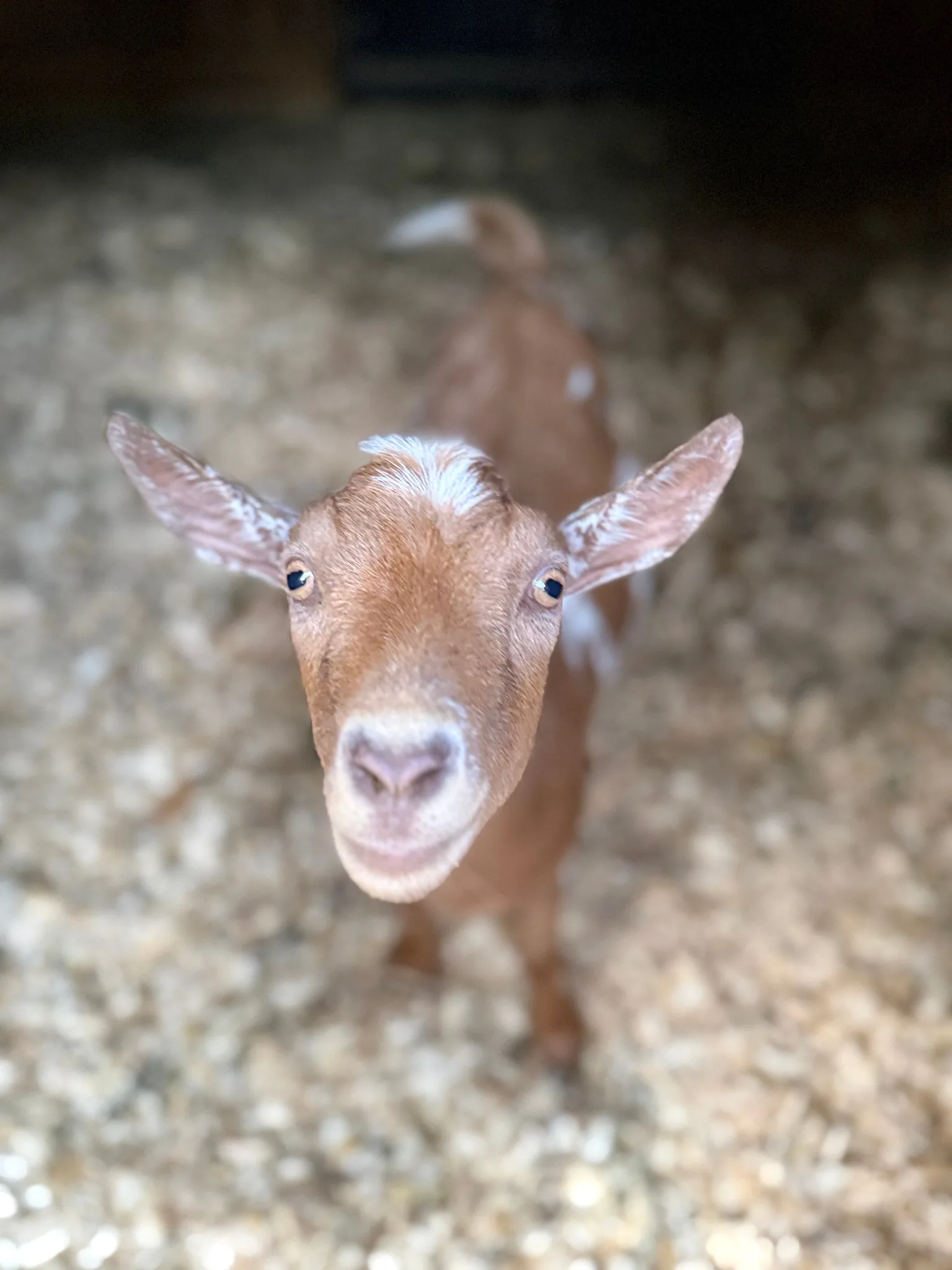
If you had told us a few years ago that running a small Nigerian Dwarf goat farm would eventually require us to understand web servers, backups, malicious bots, remote-code-execution vulnerabilities and something called PHP2Shell, we probably would have looked at you about the same way Hissy Fit is looking at us in this picture. Yet, here we are.
There are the farm chores everybody expects: feeding goats, filling water buckets, cleaning barns, fixing fences, trimming hooves and repairing whatever somebody managed to break since yesterday. Then there are the chores nobody really warns you about: maintaining a website, keeping backups, watching suspicious traffic and occasionally wondering why somebody on the other side of the world is trying to break into the website of a small goat farm in Georgia. The past few weeks gave us more of that second category than we particularly wanted.
A Little Farm Meets a Big Internet
Our website has been around for years. Like millions of other websites, it was built with WordPress, which in turn relies heavily on PHP behind the scenes. WordPress itself was not the problem that finally pushed us over the edge. In October 2026, two critical vulnerabilities were disclosed in PHP itself, CVE-2026-109618 and CVE-2026-109619. Both were rated critical and could allow an unauthenticated attacker to execute code on vulnerable web servers. PHP released patched versions on October 21, and security organizations began urging administrators to update quickly. Exploitation attempts were subsequently observed in the wild. That got our attention.
Again, these were not specifically WordPress vulnerabilities. PHP sits underneath a lot of web applications, including WordPress, Drupal and plenty of custom software. The issue was deeper in the stack, which meant simply installing another WordPress security plugin was not going to magically fix it.
For people running large websites with full-time IT departments, patching something like this is another Tuesday. We breed goats and, apparently, running a goat farm in 2026 requires rather more than a passing familiarity with cybersecurity.
The Bigger Question
The PHP vulnerabilities were really just the latest reminder of something we had already been thinking about. Our old website had accumulated years of moving parts. WordPress itself. PHP. Themes. Plugins. Server software. Hosting. Updates. Security rules. Backups. Every additional piece did something useful, but every piece was also something else that eventually needed maintenance.
None of this means WordPress is bad. WordPress powers an enormous portion of the web and remains a perfectly reasonable choice for millions of websites. But we started asking a different question: “Did our little farm website still need all of it?”
We are not running an online newspaper. We are not hosting thousands of user accounts. We are not building a giant social network. We need a place to introduce the farm, show off the goats, share breeding information, post the occasional story and help people find our goat milk soap. That’s about it, so we decided to simplify.
Starting Over
We rebuilt odmfarms.com from the ground up using Astro and moved the site to Cloudflare Pages. The public website is now primarily static, which means we no longer need the traditional WordPress/PHP stack simply to show somebody a picture of Mini or tell them when breeding season starts. That change dramatically reduced the number of moving parts we have to maintain. There is no WordPress installation sitting on the public server waiting for plugin updates. There is no PHP runtime behind every page request. Most of the site is simply generated ahead of time and delivered to whoever visits it. This does not make us magically immune to security problems. Nothing connected to the internet gets that guarantee. We still have to think about backups, account security, deployment, DNS and the other pieces that make the website work. But it does mean there are fewer doors to watch. For two people who would generally rather be discussing goats than server logs, fewer doors sounded pretty good.
So What Does Any of This Have to Do With a Goat Farm?
More than we expected. Small farms increasingly depend on technology just like other small businesses do. People find us through Google and Facebook. They look through our herd online. They check breeding plans. They read about the farm. They find our soap. They send us messages and eventually some of them become customers, friends or both. The website is not the farm, but it is often somebody's first trip through the gate. That made the rebuild worth doing properly. The new site is faster, simpler, easier for us to maintain and, most importantly, something we understand well enough to recover ourselves if things ever go sideways.
We also gave the place a pretty serious cleaning while we were at it. The herd pages were reorganized, old material was removed, navigation was simplified and the whole thing feels considerably more like the farm we have today than the website we originally built years ago. If you have not wandered around odmfarms.com lately, it may look a little different which was completely intentional.
Meanwhile, the Goats Remain Unimpressed
Through all of the PHP vulnerabilities, server logs, backups, website rebuilding and late-night troubleshooting, the goats continued operating normally. Breakfast was still expected on time, water buckets still required filling, fences continued requiring repair and Mini continued being Mini.
Hissy Fit remained completely uninterested in whether our website was powered by WordPress, Astro, PHP, carrier pigeons or two tin cans connected with string. Honestly, she probably has the right perspective. Technology changes constantly. The farm does not and after the last few weeks, we are perfectly happy with that.